Vision Vivante

Why WordPress Continues to Dominate in 2026: Simplicity and Scalability in Modern Web Development

In a digital landscape overflowing with content management systems (CMS), one name consistently rises above the rest: WordPress. Powering more than 40% of all websites globally, WordPress isn’t just a passing trend; it’s a proven, reliable, and future-ready platform trusted by bloggers, startups, enterprises, eCommerce brands, and developers worldwide. But what exactly keeps WordPress at the forefront of modern web development year after year?


The answer lies in two powerful pillars: simplicity and scalability. Together, they make WordPress a preferred choice for anyone seeking performance, flexibility, and long-term growth.

The Beauty of Simplicity

When building a website, the last thing anyone wants is a complex, confusing system. This is where WordPress truly excels. Its intuitive, user-friendly dashboard allows even complete beginners to build, manage, and maintain websites without technical expertise. Tasks like adding blog posts, uploading media, creating pages, and updating content can be done effortlessly.

Unlike many complicated platforms, WordPress ensures that users can focus on what truly matters—creating content, growing their brand, and engaging their audience.

Effortless Customization

WordPress offers thousands of professionally designed themes, enabling users to instantly transform their website’s appearance without starting from scratch. Whether you want a sleek corporate design, a creative portfolio, a personal blog layout, or a dynamic online store, there is a theme for every need and niche.

On top of that, plugins bring additional power and functionality. Need SEO optimization? There’s a plugin. Want security, analytics, forms, social media integration, or full-fledged eCommerce? WordPress has it all. The best part? Most of this can be done with a few clicks—no coding required.

This simplicity empowers business owners, creators, entrepreneurs, and marketers to take full control of their online presence without relying on a dedicated technical team.

Scalability for Every Stage of Growth

While simplicity gets users started, scalability keeps them loyal to WordPress in the long run.

Whether you’re running a small personal blog or managing a high-traffic eCommerce platform, WordPress can scale effortlessly to meet your needs. Many globally recognized brands, news portals, and enterprise websites operate seamlessly on WordPress because it supports growth without compromising performance.

Built to Evolve With You

As businesses expand, website demands grow too—more pages, more features, more traffic, and more complexity. WordPress handles all of it efficiently. Thanks to its open-source nature, developers can customize the platform to highly advanced levels. You can integrate third-party tools, optimize server performance, enhance security, and tailor every aspect of the website to match evolving business goals.

This flexibility ensures that as your brand evolves, your website grows with it—without needing an expensive rebuild or migration.

A Powerful and Supportive Global Community

One of the biggest strengths of WordPress is its incredibly active and passionate global community. Thousands of developers, designers, contributors, and users continuously enhance the platform through updates, plugins, themes, and educational resources.

Regular updates ensure that WordPress remains secure, fast, modern, and compatible with the latest digital trends. Meanwhile, extensive documentation, tutorials, forums, and community discussions mean help is always available. Whether you’re a beginner learning basics or a developer solving complex technical challenges, you are never alone in the WordPress ecosystem.

This community-driven support structure makes WordPress not just a platform, but a powerful collaborative environment.

SEO-Friendly and Performance-Oriented

In today’s competitive online world, having a website isn’t enough—it needs to rank well, load fast, and deliver great user experiences. WordPress is designed with SEO in mind. Clean coding structure, mobile responsiveness, fast performance compatibility, and SEO plugins like Yoast and Rank Math make it easier to optimize websites for search engines.

From customizable meta tags to structured data, sitemaps, and keyword optimization, WordPress enables websites to perform strongly in search rankings. This makes it a preferred choice for marketers and businesses aiming to grow organically.

Security and Reliability

Security remains one of the most critical priorities for any online platform. WordPress continuously enhances its security framework through updates, patches, and trusted plugins. With proper configuration, secure hosting, and best practices, WordPress websites can be highly safe and dependable.

Businesses across industries rely on WordPress not just for its flexibility, but also for its stability and protection against evolving cyber threats.

Future-Proof and Innovation Ready

The digital world is constantly evolving, but WordPress evolves with it. Whether it’s the rise of AI, headless CMS architecture, advanced integrations, API connectivity, or modern design capabilities, WordPress continues to adapt. Its ability to support new technologies ensures it remains a future-ready solution for years to come.

As user expectations grow, WordPress provides the tools to deliver richer experiences, better performance, and greater customization.

Final Thoughts

Whether you’re launching a new website or upgrading an existing one, choosing WordPress might be one of the smartest strategic decisions you can make. If you haven’t explored its potential yet, now is the perfect time. Your online presence deserves the best. And if you’re looking for professional WordPress development, design, or website optimization services, Vision Vivante, the leading website development agency in Chandigarh, is here to help you build a robust, scalable, and growth-focused digital presence.

Top 10 AI Content Creation Tools to Supercharge Your Workflow

In the fast-paced world of digital marketing and content creation, staying ahead of the curve is essential. With the emergence of artificial intelligence, it’s now easier than ever to enhance your creativity and streamline your processes. So, whether you’re an experienced content strategist or a newbie looking to make your mark, these top 10 AI content creation tools will help take your content game to the next level. Get ready to revolutionize your workflow!

List of Top 10 AI tools

1. Jasper AIJasper AI is a powerful writing assistant designed to help you create high-quality, engaging content. With its pre-built templates, Jasper can generate blog posts and social media captions in minutes. Plus, its ability to learn from your writing style means you’ll get personalized suggestions that fit your voice.


2. Copy AICopy.ai is a fantastic tool for marketers looking to draft compelling sales copy, blog ideas, and email content quickly. Its intuitive interface lets you create multiple variations of your messages, enabling better A/B testing and more effective communication.


3. GrammarlyWhile primarily known as a grammar checker, Grammarly’s AI features offer suggestions for enhancing clarity, tone, and engagement. With its advanced recommendations, you can ensure your content always strikes the right chord with your audience.


4. WritesonicWritesonic makes content creation effortless, offering features like instant article generation, product descriptions, and even ad copies. It’s an excellent choice for those who need quick yet effective content solutions, thanks to its diverse template options.


5. RytrRytr is an AI writing assistant designed to aid in brainstorming and generating ideas, complete with context and relevant words. It’s easy to use and offers a free plan, making it an excellent option for beginners wanting to dip their toes into AI content creation.


6. QuillbotQuillbot serves as an advanced paraphrasing tool that ensures your content is unique and maintains its intended meaning. With its multiple modes, you can adjust the style and tone to suit your target audience perfectly.


7. Snazzy AiSnazzy AI focuses on crafting compelling marketing content. Perfect for startups and small businesses, this tool facilitates brainstorming sessions by generating taglines, sales pitches, and other marketing materials quickly and effectively.


8. Copy SmithCopySmith harnesses the power of AI to produce trendy and catchy copy. With its e-commerce features, you can create product descriptions that grab attention and boost your online sales with ease.


9. Content BotContentBot is designed for more than just writing; it offers a suite of tools that help plan, create, and optimize content. Ideal for teams, this tool makes collaboration seamless with its content calendar and brainstorming features.


10. FraseFrase stands out by not only generating content but also optimizing it for SEO. With its content brief capabilities and topic research tools, Frase helps your writing stand a better chance of ranking higher in search results.

Conclusion

As the landscape of content creation continues to evolve, integrating AI tools into your workflow can boost productivity and creative output. These top 10 AI content creation tools are sure to give you the edge you need, making it easier to produce high-quality work that resonates with your audience. Whether you choose one or a combination, embracing AI is an excellent decision for the modern content creator.


Thank you for reading this article. I hope these tools support and inspire your content creation journey. If you’re looking to elevate your digital presence further, Vision Vivante Pvt Ltd is a full-service web and app development, graphic design, social media marketing, and SEO agency dedicated to helping brands build, grow, and scale online with creative and data-driven solutions.

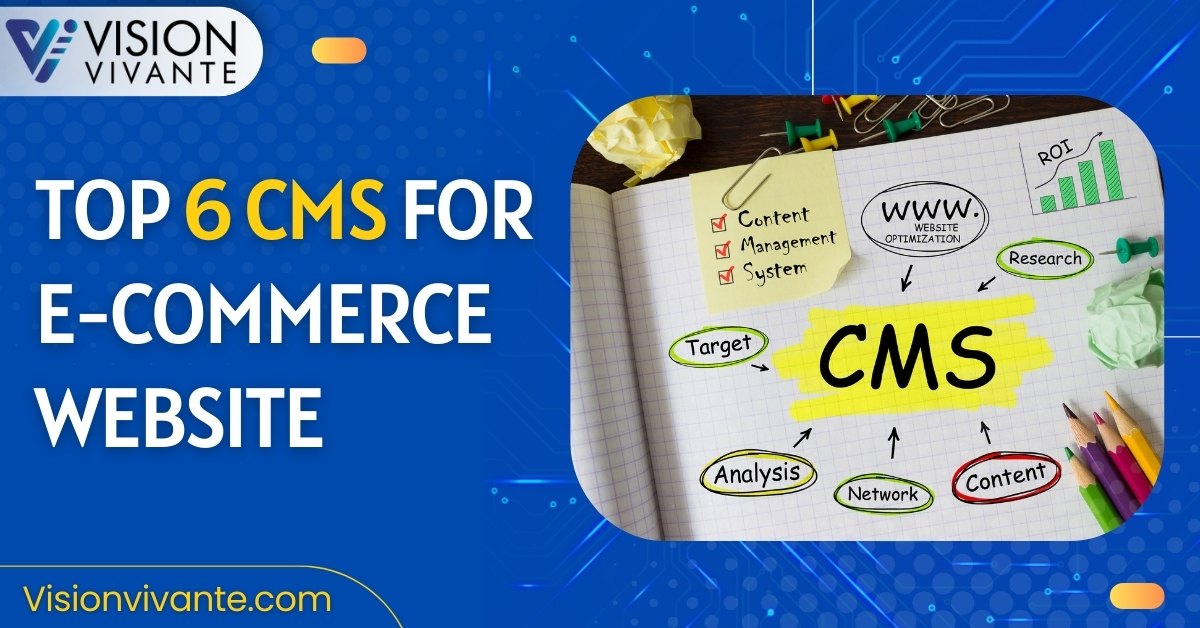
Top 6 CMS for ECommerce Website | Vision Vivante

Ecommerce website demand is increasing day by day. A CMS (content management system) is software for publishing and managing your product digitally without writing code. Digital content includes images, videos, documents, adding promotional banners, etc. Having a suitable CMS for your online store is important. You may see many CMS software available in the market, but the big question is how to know which one is best for your business.

Don’t worry; we make it simple for you, and our dedicated research team brings the best 6 CMS for you according to your requirement. Also, detailed explanations of their characteristics and functionality. It will help you to choose the right one.

Best 6 CMS Software for eCommerce

  1. WordPress
  2. Shopify
  3. Magento 2
  4. OpenCart
  5. PrestaShop
  6. BigCommerce

WordPress

WordPress is the most popular and first choice of every website owner. It is the preferable CMS platform in the industry. Also, to make your WordPress eCommerce store online, you need to add a WooCommerce plugin.

WordPress has many distinct features, making it the best in all CMS software. Around 28% of all ecommerce stores use WordPress as their CMS.

The open-source WooCommerce platform is preferred for its vast selection of themes, many of which are free. This WooCommerce plugin is easy to install, and you can create a beautiful storefront with suitable themes. Quickly customize your pages by using modular product blocks. Also, you may enhance your e-commerce store functionality with hundreds of free and paid extensions of WooCommerce.

Have any queries related regarding WordPress CMS, Contact us

Features:

  • PCI Compliance
  • Free SEO extensions
  • Having a 100+ plugins
  • Third-party integrations available
  • Easily integrate all payment gateways
  • Easily integrate your social media accounts
  • Free and open-source ecommerce platform
  • 1,300+ WooCommerce themes (including free and paid themes)

Shopify

Shopify is the leading website platform and is very popular for its best CMS for eCommerce stores. In terms of popularity, Shopify takes second place in the market after WordPress. It is mainly used in small to medium-sized enterprises and large enterprises.Shopify is known for its affordable pricing, ease of use, and advanced features. Newbies can quickly learn how to manage and customize Shopify’s site builder.The main highlighted feature of Shopify is that it is a SaaS platform. You do not need to download or install extra.. In Shopify PCI compliance, the stored data is safe and secure. Also, the Shopify eCommerce CMS platform is very responsive and easy to track, manage and modify the store.

Features:

  • Easy set-up
  • 24/7 support
  • Generated sitemap.xml
  • Inventory management
  • Social media integration
  • Free and paid extensions
  • Get better site performance
  • Mobile-friendly interference
  • Editable CSS and HTML code
  • Unlimited themes and templates

Magento 2

Magento is one of the best and most adaptableCMS platforms for online eCommerce stores.It is an open-source eCommerce platform that supports over 260,000 online stores globally. Adobe acquired Magento in 2018.The latest version of Magento is Magento 2, which can also support all business sizes. Magento 2 version has the latest features like Magento PWA Studio, Magento MSI, performance improvement, and many more.

It has two versions open source and commerce editions. Open source allows store owners to build online stores and leverage the features for free. Commerce Editions is to use advanced features such as PageBuilder, and management; you may opt for the Magento Commerce version.

Features:

  • Highly secure e-store
  • Catalog management
  • Feature-rich and robust
  • See the analytics and reports
  • Easy inventory management system
  • Wide range of users and community
  • Great B2B functionality (Commerce edition)
  • Integrated checkout, payment & shipping process
  • Best extensions for CRM, ERP, and chatbot support

OpenCart

OpenCart is quite popular in small businesses and is a free, open-source eCommerce CMS. OpenCart has 13,000+ modules and themes and comes with an upgraded paid plan. Explore free templates from third parties, which allow you to create your opencast online store. OpenCart is integrated with 36 payment gateways.Its user-friendly interface performed multiple tasks in a single admin panel. Also, you may get many advanced features like multi-store, multi-language, multi-payment, and multi-shipping-method.

Features:

  • Amazing Responsiveness
  • Easy to manage multiple stores with one account
  • Create unlimited categories
  • Integrate with various payment gateways
  • Include SEO meta tags option
  • Backup and restore all your data
  • Easily update and edit products category
  • Categorize consumers based on area, order history, gender, wish list items, etc

PrestaShop

Prestashop is another free, open-source platform CMS for an eCommerce platform. It is suitable for startups and mid-size enterprises. According to Statistics, around 700,000 e-business websites and 300,000 e-commerce stores are in the PrestaShop platform.The Prestashop platform has a user-friendly interface allowing you to easily manage your store performance, product listing, marketing, and reporting. You can get technical support from FAQs, experts, and forums.Many advanced plugins and themes are available to enhance your online eCommerce store performance. Also, you may easily integrate your social account to share your product on Facebook and Instagram.

Features:

  • Create products and add variants quickly
  • Simple inventory management
  • Secure payment gateways
  • Multiple ready-made themes
  • 300 in-built features, additionally
  • Social media integration
  • Buyer can create their account quickly
  • Create and edit categories easily

BigCommerce

BigCommerce is a great SaaS eCommerce CMS platform, solely like Shopify. Over 150,000 online stores are working on the BigCommerce platform. BigCommerce CMS (content management system) is used by many major brands like Toyota, Kodak, and Martha Stewart.BigCommerce is a cloud-based platform and has a user-friendly interface. It has customizable templates and centralized inventory management. Also, It has advanced SEO tools, native blog support, multiple payment gateway integrations, and social media marketing support.BigCommerce supports both B2B and B2C enterprises on a single platform. You may sell your products on different channels, such as Amazon, eBay, Facebook, Instagram, etc.

Features:

  • Excellent theme designs
  • Advance SEO tools
  • Supports B2B and B2C on a single platform
  • Easy to sell on multiple channels
  • AMP, and akamai image manager
  • Headless commerce in React.js/Vue.js
  • B2B functionality
  • Set custom pricing based on the buyer’s level
  • Robust and flexible website editor
  • Consumers can easily initiate refunds and partial refunds
  • Support multiple languages and currencies

I hope this guide helped you clearly understand the top CMS platforms, their features, and how they can power your ecommerce store. Choosing the right CMS becomes much easier once you know your goals and technical comfort level. If you’re a beginner, starting with WordPress is a great option — it’s user-friendly, flexible, and packed with ready-to-use plugins.


But if you want expert guidance, advanced customization, or a fully managed ecommerce build, Vision Vivante is here for you. We’re a NextGen Ecommerce Website Development Agency based in Chandigarh, India, delivering seamless support from planning to launch — and beyond.

Let’s connect, discuss your dream store, and turn ideas into reality.

Your Ecommerce success starts with a conversation… and maybe a coffee! ☕